Pedro Páramo’s childhood
Pedro and Susana as Children
As children, [Pedro Páramo](entity:character-recall-character-pedro-p-ramo-2ddfe723133d) and [Susana San Juan](entity:character-recall-character-susana-san-juan-54c57c6178a1) played together on the hills, flying a kite in the wind above [Comala](entity:location-recall-location-comala-e7c59c6d176b). The memory becomes an image of tenderness that Pedro carries into adulthood, though the two children will grow toward radically different lives.
Pedro’s recollections of Susana are not simply memories of a lost friend: they become the measure of the desire that governs his life. His later devotion will be powerful, but it will never give him access to her inner world.
Pedro Páramo’s youth
Pedro’s Early Reputation
At the family estate, Pedro showed little patience for ordinary duties. His grandmother criticized his idleness and warned that he would come to a bad end, while he resisted the humility and submission expected of him.
His father, [Don Lucas Páramo](entity:character-recall-character-6b2ff539971d), regarded him as unreliable and feared he could not sustain the family’s position. That judgment makes Pedro’s later transformation into the region’s commanding landowner all the more striking.
Before Pedro’s marriage to Dolores
Lucas Páramo Is Killed
[Don Lucas Páramo](entity:character-recall-character-6b2ff539971d) was killed by a stray shot at a wedding in [Vilmayo](entity:location-recall-location-vilmayo-d982932c7a37), where the intended victim was apparently the groom. The identity of the shooter remained uncertain, but [Pedro Páramo](entity:character-recall-character-pedro-p-ramo-2ddfe723133d) answered uncertainty with indiscriminate retaliation.
He had people killed among those who attended the wedding, extending vengeance far beyond anyone whose responsibility could be established. The massacre helped define the ruthless power he would use to secure [Media Luna](entity:location-recall-location-media-luna-e6c8b808a4b0).
After Don Lucas Páramo’s death
Pedro Takes the Estate’s Debts
With the family’s finances in disarray, [Fulgor Sedano](entity:character-recall-character-e10bd83387e8) laid out the debts and the remaining creditors for [Pedro Páramo](entity:character-recall-character-pedro-p-ramo-2ddfe723133d). Pedro cared less about the amounts owed than about who held claims over the land.
Rather than repay the creditors, he began turning their claims into opportunities to acquire property and influence. His rise depended on making legal and financial arrangements serve his own authority.
During Pedro’s consolidation of Media Luna
Dolores Becomes Pedro’s Target
[Fulgor Sedano](entity:character-recall-character-e10bd83387e8) reported that the Preciado sisters were among the estate’s largest creditors and that [Dolores Preciado](entity:character-recall-character-5a4a8560f708) held valuable property. Pedro ordered him to ask for her hand, not out of affection but because marriage would bring her land under his control.
The proposal exposes the logic behind Pedro’s courtship: desire and acquisition are inseparable in his dealings. He instructed Fulgor to arrange the marriage quickly and to secure the property under the couple’s shared estate.
On Dolores’s wedding night
Eduviges Takes Dolores’s Place
Dolores feared that a warning from [Inocencio Osorio](entity:character-recall-character-f9728bf95066) meant she must not sleep with a man that night. She begged her close friend [Eduviges Dyada](entity:character-recall-character-436ded4cce08) to take her place in the dark, promising to repay the favor.
Eduviges agreed because she desired Pedro too. She spent the night beside him, but he was exhausted and slept; Dolores went to him the following night. The episode reveals the intimate friendship between the women and the uneasy circumstances surrounding the marriage.
Soon after Don Lucas Páramo’s death
Pedro Marries Dolores
Pedro pressed for a marriage before Dolores had time to prepare, while [Fulgor Sedano](entity:character-recall-character-e10bd83387e8) persuaded her that Pedro was deeply in love with her. The wedding went ahead despite Dolores’s wish to wait and her private misgivings about what would follow.
The marriage gave Pedro access to the Preciado property and strengthened his hold over the estate. What Dolores understood as a chance at happiness became a means by which Pedro consolidated his land and power.
During Pedro’s early rule at Media Luna
Aldrete Is Framed and Hanged
[Toribio Aldrete](entity:character-recall-character-f9ce0f5fd62a) challenged Pedro’s claims over a boundary and objected to the way [Fulgor Sedano](entity:character-recall-character-e10bd83387e8) had prepared a legal accusation against him. Fulgor lured him to an inn, where Pedro’s men shut him in and hanged him.
Afterward, the room was sealed so Aldrete’s body could not be properly recovered. Its trapped cries and the condemned doorway become part of [Comala](entity:location-recall-location-comala-e7c59c6d176b)’s spectral landscape, while the killing signals that Pedro’s law is simply force.
After Juan’s birth
Dolores Leaves Media Luna
Dolores grew increasingly unhappy at [Media Luna](entity:location-recall-location-media-luna-e6c8b808a4b0), where she rose before dawn to serve Pedro and endured his neglect. When she sighed for her sister, Pedro sent her away rather than ask her to stay.
She left the estate and eventually lived in [Colima](entity:location-recall-location-colima-fbaf8df6f8f0) with relatives, refusing to return unless Pedro summoned her. He never did. Her departure left [Juan Preciado](entity:character-recall-character-0a33109aaaf7) to grow up without his father and turned [Comala](entity:location-recall-location-comala-e7c59c6d176b) into a cherished, painful place in her memories.
About a year after the wedding-night substitution
Juan Is Born
Dolores gave birth to [Juan Preciado](entity:character-recall-character-0a33109aaaf7) the year after her wedding. Eduviges later told Juan that the night she had shared with Pedro made it possible that she, rather than Dolores, might have borne him.
The uncertainty about his conception echoes the novel’s damaged family ties, but Juan grows up as Dolores’s son. His journey to [Comala](entity:location-recall-location-comala-e7c59c6d176b) will be driven by the absence of the father whose name she gave him.
Miguel’s infancy
Pedro Recognizes Miguel
A servant brought Pedro a newborn after the mother died in childbirth, saying the child was his. Pedro accepted [Miguel Páramo](entity:character-recall-character-1cb8c1c182e4) without hesitation and instructed [Damiana Cisneros](entity:character-recall-character-damiana-cisneros-cf660f0bd16c) to care for him.
The priest who delivered the child feared the boy’s blood and did not want responsibility for raising him. Pedro dismissed the concern, but his later indulgence of Miguel’s violence would make the child’s acknowledged paternity a source of suffering throughout [Comala](entity:location-recall-location-comala-e7c59c6d176b).
Miguel’s adolescence
Miguel’s Violence Goes Unchecked
As Miguel grew up, he used Pedro’s protection to act with impunity. [Fulgor Sedano](entity:character-recall-character-e10bd83387e8) repeatedly brought complaints to Pedro, including the report that Miguel had killed a man, but Pedro insisted that the victims effectively did not exist.
Pedro’s refusal to restrain his son made violence an extension of the estate’s power. Miguel learned that wealth and paternal authority could erase consequences, while the people of [Comala](entity:location-recall-location-comala-e7c59c6d176b) were left to absorb the harm.
During Miguel’s adolescence
Dorotea Finds Women for Miguel
[Dorotea la Malfichada](entity:character-recall-character-03c1cf218144) arranged meetings between Miguel and young women, sometimes bringing them to him and sometimes telling him when they would be alone. She believed she was helping him and continued for years, losing count of how many women were involved.
After Miguel’s death, [Dorotea](entity:character-recall-character-dorotea-5273c5c032d1) confessed her role to [Father Rentería](entity:character-recall-character-father-renter-a-1feb0a00c2ae). Her revelation showed how the town’s vulnerable people could be drawn into the machinery of Miguel’s abuse and how guilt endured even when those responsible had died.
Before Miguel’s fatal fall
Miguel Kills Ana’s Father
[Miguel Páramo](entity:character-recall-character-1cb8c1c182e4) killed [Ana](entity:character-recall-character-31bcb32f225b)’s father. Later, he entered Ana’s room at night and forced himself on her, claiming that he had come to apologize for the murder.
Ana could not be certain of what she had seen in the darkness, but she knew Miguel’s name and what he had done. Her account to her uncle, [Father Rentería](entity:character-recall-character-father-renter-a-1feb0a00c2ae), made clear that Miguel’s violence continued even when dressed up as remorse.
After Miguel assaults Ana
Father Rentería Accepts Pedro’s Money
[Father Rentería](entity:character-recall-character-father-renter-a-1feb0a00c2ae) knew that Miguel had committed grave wrongs, including the murder of [Ana](entity:character-recall-character-31bcb32f225b)’s father and the assault on Ana. At Miguel’s funeral, he first refused to bless the body, declaring that the young man had been wicked.
[Pedro Páramo](entity:character-recall-character-pedro-p-ramo-2ddfe723133d) placed gold coins before the priest, and Father Rentería performed the blessing after all, then wept over his own submission. His conduct exposed the Church’s dependence on Pedro and the priest’s growing crisis of conscience.
After his assault on Ana
Miguel Dies on the Road
Miguel rode toward [Contla](entity:location-recall-location-contla-dfb2f81e32c6) on his horse, Colorado, and tried to leap a newly built stone barrier rather than take the longer road. He failed to find the town in the fog and later realized he had died in the fall.
He appeared to [Eduviges Dyada](entity:character-recall-character-436ded4cce08) that night, unable to understand why he could not reach his destination. The visit revealed that the dead could remain as voices and apparitions in [Comala](entity:location-recall-location-comala-e7c59c6d176b), and that Miguel’s horse continued to search for him.
The day after Miguel’s fatal fall
Miguel’s Funeral
Miguel’s body was brought back to [Media Luna](entity:location-recall-location-media-luna-e6c8b808a4b0), and Pedro ordered the horse killed to end its agitation. He showed no visible grief, saying instead that he had begun to pay for what was coming.
At the funeral, [Father Rentería](entity:character-recall-character-father-renter-a-1feb0a00c2ae)’s blessing followed Pedro’s offer of gold. The ritual could not settle the town’s sense of injustice: rumors persisted that Miguel’s spirit continued to visit the woman he had assaulted.
Before Juan arrives in Comala
Eduviges Is Denied Absolution
[Eduviges Dyada](entity:character-recall-character-436ded4cce08) had spent her life helping people and giving what little she had, including shelter and care to men who left her with children they would not acknowledge. When she became desperate and took her own life, [Father Rentería](entity:character-recall-character-father-renter-a-1feb0a00c2ae) refused to absolve her, citing the Church’s condemnation of suicide.
[María Dyada](entity:character-recall-character-74454664e0d1) pleaded that Eduviges had died in terrible suffering and deserved compassion. The priest’s inability to grant relief without money for special services exposed the gap between religious doctrine and the poor person’s need for mercy.
After Eduviges’s death and Miguel’s funeral
Father Rentería’s Spiritual Crisis
[Father Rentería](entity:character-recall-character-father-renter-a-1feb0a00c2ae) lay awake, remembering the people whose pleas he had failed to answer and the powerful men whose money sustained him. He wondered what faith could mean when the poor could not afford the rites that might help their dead.
A priest in [Contla](entity:location-recall-location-contla-dfb2f81e32c6) later refused him absolution, telling him that kindness was not enough while he continued to serve Pedro’s power. Rentería returned to [Comala](entity:location-recall-location-comala-e7c59c6d176b) with his moral authority weakened, still trapped between his calling and his dependence.
Many years before Juan’s journey
Pedro Searches for Susana
Pedro spent decades pursuing the return of [Susana San Juan](entity:character-recall-character-susana-san-juan-54c57c6178a1), whose childhood had left an enduring impression on him. He invited her father, [Bartolomé San Juan](entity:character-recall-character-5b07a8f85510), back to [Comala](entity:location-recall-location-comala-e7c59c6d176b) under pretexts that concealed his real purpose.
His longing was mixed with possession: he wanted Susana near him and was willing to manipulate the people around her to achieve it. When the two returned, Pedro’s private desire became a new source of danger for them both.
During Susana’s childhood
Susana’s Childhood in the Mine
Bartolomé once lowered the young Susana into a mine shaft and ordered her to search for money. She found a human skull and then the bones of a body, handing them up one by one while her father urged her to keep looking.
The terrifying episode became part of Susana’s fractured inner life. It also revealed Bartolomé’s cruelty and helped explain why memories, dreams, and present experience would later blur for her.
After years away
Bartolomé Returns to Comala
[Bartolomé San Juan](entity:character-recall-character-5b07a8f85510) returned to [Comala](entity:location-recall-location-comala-e7c59c6d176b) with Susana and settled into the house Pedro had made available. He hoped the move would protect his daughter from the dangers surrounding the region, but he understood that Pedro’s hospitality came with a price.
Pedro told Bartolomé outright that he wanted Susana. She accepted the prospect of intimacy with Pedro, while Bartolomé tried to assert his authority as her father. Their strained exchange showed that Susana’s wishes and her father’s claims could not be reconciled.
Soon after Bartolomé returns
Pedro Arranges Bartolomé’s Death
Pedro ordered [Fulgor Sedano](entity:character-recall-character-e10bd83387e8) to send Bartolomé back to the remote mining district without Susana. He reasoned that, away from witnesses, Bartolomé could be made to disappear while Susana remained at [Media Luna](entity:location-recall-location-media-luna-e6c8b808a4b0).
The plan removed the last close family tie that might have taken Susana away from Pedro. Bartolomé died in the mines, and Pedro kept Susana at the estate, though her emotional life remained beyond his understanding.
After Bartolomé’s death
Susana’s Father Appears to Her
Susana experienced Bartolomé’s presence after his death and understood that he had come to say goodbye. When [Justina Díaz](entity:character-recall-character-0db2931eb425) told her that he was dead, Susana smiled, certain that the nighttime visitor had been her father.
Her perceptions carried the dead into the rooms of the living, while those around her struggled to distinguish vision from fact. Pedro could provide comfort and security, but he could not reach the private world in which Susana lived.
During Susana’s life at Media Luna
Susana and Florencio
Susana’s memories and dreams returned repeatedly to [Florencio](entity:character-recall-character-b2a2387b6b61), whose death left her yearning for the physical closeness she associated with him. She spoke of the ocean and of giving herself to its waves, while Pedro watched her sleep and listened without understanding whom she desired.
Pedro loved Susana, but his devotion could not make him the person she longed for. Her inner life remained inaccessible to him, and her worsening mental isolation turned their marriage into a proximity without mutual understanding.
During the Mexican Revolution’s armed-conflict period
Fulgor Is Killed by Revolutionaries
Armed revolutionaries confronted [Fulgor Sedano](entity:character-recall-character-e10bd83387e8) while he was inspecting waterworks near [Media Luna](entity:location-recall-location-media-luna-e6c8b808a4b0). They identified him as Pedro’s steward, ordered him to deliver a message, and killed him as he tried to flee.
The news reached Pedro through a surviving messenger. Fulgor’s death ended the service of the agent who had helped build Pedro’s authority and made clear that armed unrest was now pressing directly on the estate.
After Fulgor Sedano’s death
Pedro Bargains with Insurgents
A band of armed men came to Pedro’s house, claimed to have risen against the government and against local exploiters, and demanded support. Pedro offered money and promised them several hundred men, presenting the payment as aid while preserving his own leverage.
He then put [Damasio](entity:character-recall-character-0b1bfdb73a3d), known as [Le Boa](entity:character-recall-character-le-boa-104889290d4a), in command of the contingent he supplied. The arrangement allowed Pedro to manage the revolutionary threat by directing it, rather than openly resisting forces he could not yet defeat.
Soon after Pedro’s bargain
Damasio Joins the Revolution
[Damasio](entity:character-recall-character-0b1bfdb73a3d) took Pedro’s men and joined the armed movement, carrying only part of the promised money and leaving the rest in Pedro’s hands. He moved among shifting factions as the conflict changed names and loyalties.
When he returned seeking more supplies, Pedro urged him to attack the wealthy town of [Contla](entity:location-recall-location-contla-dfb2f81e32c6) rather than ask for charity. The advice turned Damasio’s campaign toward plunder and showed how Pedro sought to profit from upheaval while keeping danger away from his own estate.
During Susana’s final illness
Susana Tries to Burn Herself
Susana believed [Father Rentería](entity:character-recall-character-father-renter-a-1feb0a00c2ae) had come to console her and tried to take the candle flame into her hands, saying that her grief might relieve his. The priest pulled the flame away when he smelled her skin burning.
Her gesture revealed how fully her private perceptions had overtaken ordinary reality. Rentería left without reaching her, while Pedro continued to watch over a woman whose suffering he could neither understand nor soothe.
During her final days
Susana’s Last Communion
As Susana’s condition worsened, [Father Rentería](entity:character-recall-character-father-renter-a-1feb0a00c2ae) arrived to give her communion. She swallowed the host while half asleep and spoke as if [Florencio](entity:character-recall-character-b2a2387b6b61) were beside her, then sank back beneath the sheets.
Pedro remained near her, hoping for a sign that she could recognize him or share his grief. The scene deepened his helplessness: he could arrange priests, doctors, and care, but not command Susana’s attention or love.
December 8
Susana Dies
[Susana San Juan](entity:character-recall-character-susana-san-juan-54c57c6178a1) died after a long illness marked by disturbed dreams and increasing withdrawal from the people around her. [Father Rentería](entity:character-recall-character-father-renter-a-1feb0a00c2ae) attempted to prepare her for death, but she asked him to leave her in peace and would not respond to his efforts as he hoped.
Her death ended Pedro’s last sustaining attachment. The woman he had waited decades to possess was gone, and his grief hardened into an intention to punish the town that had treated her death as an occasion for amusement.
Beginning on December 8
The Funeral Bells Ring
The bells of [Comala](entity:location-recall-location-comala-e7c59c6d176b) rang for Susana’s death, but the tolling continued for days and drew people from nearby places. Visitors arrived in a stream, and the funeral atmosphere gradually gave way to music, drinking, and public celebration.
At [Media Luna](entity:location-recall-location-media-luna-e6c8b808a4b0), the household kept quiet and mourned. The contrast between Pedro’s private loss and the town’s revelry made his grief feel like an injury inflicted by Comala itself.
After Susana’s funeral
Pedro Turns Against Comala
Pedro declared that he would fold his arms and let [Comala](entity:location-recall-location-comala-e7c59c6d176b) starve. He withdrew the estate’s support and refused to sustain the town as he had before.
The decision converted personal grief into collective punishment. As people left or died and the estate declined, Comala’s streets emptied, leaving behind a place increasingly inhabited by memories and the dead.
In the years after Susana’s death
Media Luna Falls into Ruin
Pedro abandoned ordinary management of his properties, and the land deteriorated while people departed in search of work and food. Some remained because they had nowhere else to go or still hoped Pedro would leave them an inheritance.
The population dwindled further during the Cristero conflict, when soldiers took the few men who remained. [Comala](entity:location-recall-location-comala-e7c59c6d176b) became a deserted landscape of abandoned houses, echoes, and unquiet souls.
During the Cristero conflict
Father Rentería Takes Up Arms
After years of compromise and spiritual distress, [Father Rentería](entity:character-recall-character-father-renter-a-1feb0a00c2ae) joined the armed rebellion. [Damasio](entity:character-recall-character-0b1bfdb73a3d) asked Pedro whether his men should support the priest or fight against him, and Pedro advised him to side with the government.
The priest’s decision carried his crisis out of the confessional and into armed conflict. It also showed how [Comala](entity:location-recall-location-comala-e7c59c6d176b)’s religious and political authorities had been drawn into the same violence that had shaped the region for years.
Late in Pedro’s life
Refugio Dies
[Refugio](entity:character-recall-character-refugio-f879f889f103), Abundio Martínez’s wife, died after a final illness. Abundio sold his mules to pay for medical help, but the expense could not save her; he was left alone with her body and without the money to bury her.
He went from one place to another seeking help, while the old connections that might once have sustained the poor had disappeared. His grief and desperation set the course for his final confrontation with Pedro.
The morning after Refugio’s death
Abundio Seeks Burial Money
Abundio Martínez went to a local shop for alcohol and spoke of [Refugio](entity:character-recall-character-refugio-f879f889f103)’s death, but he found no one able or willing to help him bury her. Drunk and grieving, he walked toward [Media Luna](entity:location-recall-location-media-luna-e6c8b808a4b0) and asked Pedro for charity.
The plea placed father and son face to face without either recognizing a relationship of care. Pedro had never acknowledged Abundio as his child, and now the poor man’s request met the same indifference that had shaped his life.
The morning after Refugio’s death
Abundio Stabs Pedro
As Abundio asked for help, [Damiana Cisneros](entity:character-recall-character-damiana-cisneros-cf660f0bd16c) cried out and tried to ward him off. In the confusion, Abundio stabbed Pedro; bystanders seized him and carried him away while Damiana was overcome.
Pedro watched the men take his unrecognized son toward the village. His final thoughts returned to Susana, and his body collapsed, ending the rule that had impoverished [Comala](entity:location-recall-location-comala-e7c59c6d176b) and left so many lives broken.
Moments after Abundio is taken away
Pedro Dies Like Stones
Pedro tried to rise with Damiana’s help, managed only a few steps, and fell to the ground. He broke apart like a heap of stones, and the landowner who had seemed immovable was finally reduced to lifeless matter.
His death brought no reconciliation or public reckoning. The estate’s violence and neglect remained embedded in [Comala](entity:location-recall-location-comala-e7c59c6d176b), where the dead continued to speak long after its ruler was gone.
A week before Juan’s arrival
Dolores Sends Juan to Comala
As she lay dying, [Dolores Preciado](entity:character-recall-character-5a4a8560f708) asked her son, [Juan Preciado](entity:character-recall-character-0a33109aaaf7), to go to [Comala](entity:location-recall-location-comala-e7c59c6d176b) and find his father. She told him to demand only what was owed and to make Pedro answer for having forgotten them.
Juan pressed her hands and promised, though at first he had no intention of going. After her death, however, hopes and imagined possibilities gathered around the name of the father he had never known.
During the August heat
Juan Meets Abundio
Juan traveled toward [Comala](entity:location-recall-location-comala-e7c59c6d176b) through the heat of August and met a muleteer at [Los Encuentros](entity:location-recall-location-los-encuentros-ca349ed687e7). When Juan said he was looking for [Pedro Páramo](entity:character-recall-character-pedro-p-ramo-2ddfe723133d), the man told him that he too was a son of Pedro.
The muleteer, Abundio, described Pedro as the personification of resentment and pointed out that all the land around them belonged to him. Only after the two reached Comala did Abundio reveal that Pedro had been dead for years.
At dusk on the day of his arrival
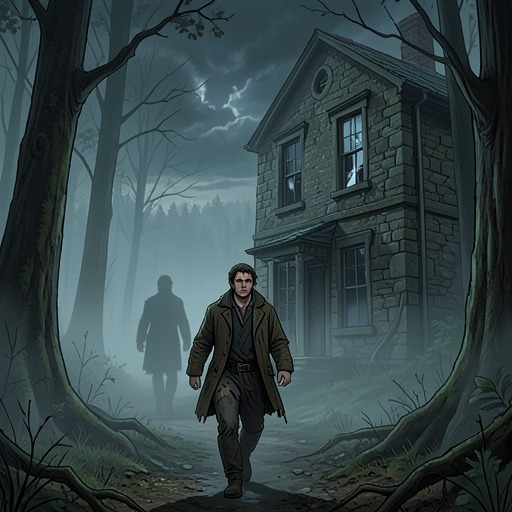
Juan Enters an Empty Comala
Juan arrived in a silent [Comala](entity:location-recall-location-comala-e7c59c6d176b), where empty houses stood open to weeds and his footsteps echoed through the streets. He thought the place should resemble his mother’s recollections, but found no living village to match them.
A woman in a shawl directed him to [Eduviges Dyada](entity:character-recall-character-436ded4cce08)’s house near the bridge. The encounter began Juan’s passage into a place where voices and presences outlasted ordinary life.
The evening of Juan’s arrival
Eduviges Welcomes Juan
[Eduviges Dyada](entity:character-recall-character-436ded4cce08) greeted Juan as if she had been expecting him and said Dolores had warned her he would arrive that day. She had prepared a room, though it contained little beyond darkness and stored belongings.
Juan told her that his mother was dead. Eduviges explained that she and Dolores had once been close and spoke as though the dead could still send messages across great distances.
Juan’s first night in Comala
Eduviges Reveals the Wedding Secret
Eduviges told Juan that she had nearly been his mother. On Dolores’s wedding night, she had taken Dolores’s place beside Pedro, at her friend’s request, though Pedro slept through the encounter.
Dolores had later given birth to Juan and left [Media Luna](entity:location-recall-location-media-luna-e6c8b808a4b0) for her sister. Eduviges’s story connected Juan’s arrival to the marriage that had brought Dolores into Pedro’s household and to the friendship that outlived their separation.
During Juan’s first night
Miguel’s Ghost Visits Eduviges
As Eduviges spoke, she heard [Miguel Páramo](entity:character-recall-character-1cb8c1c182e4)’s horse return along the road, although Juan heard nothing. She recounted how Miguel had appeared at her window after his fatal fall, confused because he could not find [Contla](entity:location-recall-location-contla-dfb2f81e32c6).
A servant had later confirmed Miguel’s death, and the horse’s restless return became part of the story. Juan began to understand that the sounds of [Comala](entity:location-recall-location-comala-e7c59c6d176b) belonged to more than the living.
Later that night
Juan Hears the Hanged Man
Juan heard a drawn-out cry from the room where he had been sleeping. [Damiana Cisneros](entity:character-recall-character-damiana-cisneros-cf660f0bd16c) came to fetch him and explained that [Toribio Aldrete](entity:character-recall-character-f9ce0f5fd62a) had been hanged there and that the door had been sealed with his body inside.
Damiana could not explain how Eduviges had opened the room for him. She said Eduviges must still be wandering as a soul in distress, confirming that Juan’s host was among [Comala](entity:location-recall-location-comala-e7c59c6d176b)’s dead.
After Juan leaves Eduviges’s house
Damiana Guides Juan Through Echoes
Damiana walked Juan through streets filled with echoes, describing voices and figures that had seemed to her like ordinary presences. She recalled seeing her dead sister among a funeral procession and warned Juan that the village’s dead still wandered through it.
When Juan asked whether his mother had told her he was coming, Damiana could not answer. She disappeared, leaving him alone among empty houses and voices that repeated his calls.
The following night
Juan Hears the Town’s Voices
Alone in [Comala](entity:location-recall-location-comala-e7c59c6d176b), Juan heard fragments of conversations from people long gone: disputes over land, plans to elope, and ordinary talk carried through the dark. The voices made the deserted streets feel crowded, while the town itself offered no visible explanation for them.
Overwhelmed, Juan considered leaving. He came upon a man and woman in a ruined house and asked if they were dead; they told him he was drunk and let him stay, but their own relationship carried a disturbing secret.
The day after Juan meets the couple
Juan Stays with Donis and His Sister
The woman explained that she and [Donis](entity:character-recall-character-bdd34e26583d) were siblings who lived together as husband and wife, isolated in a nearly empty village. She said the people of [Comala](entity:location-recall-location-comala-e7c59c6d176b) remained shut in their houses while souls wandered outside at night.
She also described their guilt and their fear of being seen, while Donis told Juan that the place was full of unpardoned dead. Their confinement showed how the living, too, were trapped by Comala’s isolation and past.
That evening at Donis’s house
Juan Sees the Old Woman
While [Donis](entity:character-recall-character-bdd34e26583d) and his sister were away, an old woman entered the ruined house, searched beneath the bed, and carried off linens. Juan watched her, though the others later denied seeing anyone leave.
The couple treated Juan’s account as a fevered illusion. His growing inability to distinguish ordinary events from the village’s apparitions intensified his fear and left him increasingly alone.
That night
Juan Dies Among the Whispers
Juan left the house and went into the streets, where whispers seemed to seep from the walls and gather around him. He imagined a crowd asking him to pray for them, and terror tightened into a cold that seemed to come from within his own body.
He reached the plaza and collapsed, convinced that the murmurs had killed him. [Dorotea](entity:character-recall-character-dorotea-5273c5c032d1) later told him that she and [Donis](entity:character-recall-character-bdd34e26583d) had found his body and buried him, making his death the point from which the rest of his journey would be heard from the grave.
After Juan’s burial
Juan Shares a Grave with Dorotea
Buried beside Juan, [Dorotea](entity:character-recall-character-dorotea-5273c5c032d1) explained that she had spent her life believing she had borne a son. In one dream, she had held the child in her arms; in another, a heavenly figure told her she had never been given a real son.
She had lived on in hope and regret, and after death found rest in Juan’s arms. Their conversation made the grave a place where the dead could speak, remember, and try to understand the lives that had failed them.
During the conversations in the grave
Juan Learns of Comala’s Abandonment
[Dorotea](entity:character-recall-character-dorotea-5273c5c032d1) told Juan that [Comala](entity:location-recall-location-comala-e7c59c6d176b) had emptied as people left for other places, some expecting to return and others hoping Pedro would eventually die and distribute his property. Pedro remained at [Media Luna](entity:location-recall-location-media-luna-e6c8b808a4b0), but his land and authority no longer sustained a living community.
The village’s decline followed the death of Susana and Pedro’s refusal to support Comala. The people who stayed behind were left with hunger, isolation, and the voices of those who had died without peace.
After Juan’s death
The Dead Continue to Speak
Juan and [Dorotea](entity:character-recall-character-dorotea-5273c5c032d1) heard other buried voices nearby, including a man recounting how Pedro’s retaliation after his father’s death had left him maimed. The stories moved between personal recollection and communal rumor, with each voice adding to the record of violence around [Comala](entity:location-recall-location-comala-e7c59c6d176b).
The dead were not silent or finished with the past. Their continuing testimony showed how the living town’s abuses persisted as memory, guilt, and sound beneath the ground.